Is Guanajuato City Worth Visiting? What to Know Before You Go
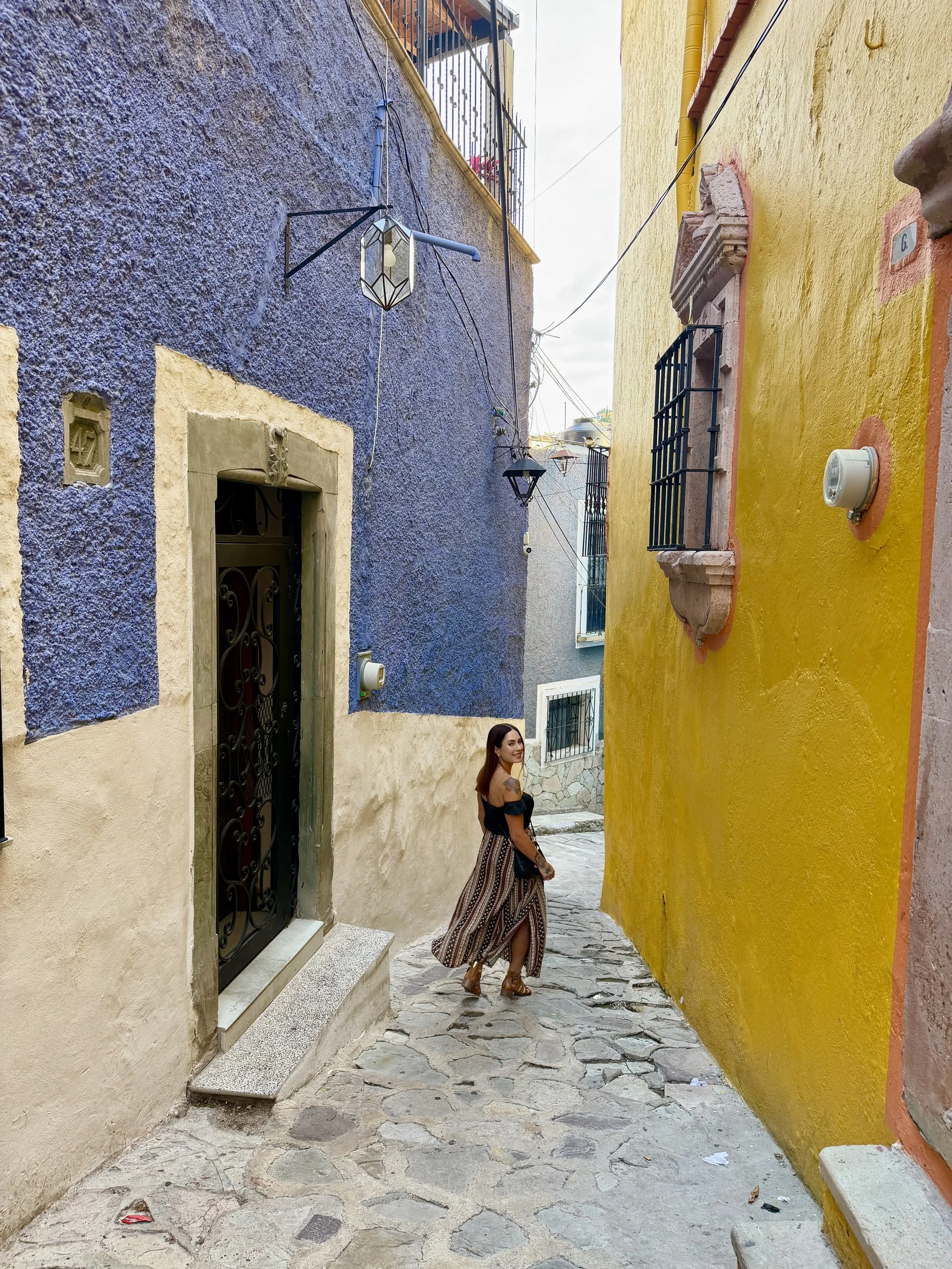
Walking through the 'callejones’ in Guanajuato Capital
Guanajuato City (also known as Guanajuato Capital by locals) had been sitting on my Mexico travel list for years. I kept seeing its hillside homes, dramatic churches, narrow alleyways, underground streets, and historic architecture online, and I wanted to know what the city was really like beyond the photos.
In this article, I’m sharing my honest experience visiting Guanajuato, along with the practical details I would have wanted before going. I’ll cover whether it felt safe for solo travel and for women traveling together, how easy it was to explore without a car, which Guanajuato City attractions are worth prioritizing, and what to expect from the hills, altitude, food scene, culture, and historic center.
I’ll also cover if Guanajuato is LGBTQ+ friendly and what LGBTQ+ travelers should know before visiting.
For me, Guanajuato City was completely worth visiting. It was lively, full of history, easy to explore at our own pace, and very different from the resort-style Mexico trip many travelers may be used to.
The Perspective Behind This Guanajuato City Guide
I experienced Guanajuato City in a couple of different ways, which gave me a pretty well-rounded view of what a first trip can look like.
Since I arrived on my own, I explored solo before my best friend joined me, then spent six days traveling with her. She left a day before I did as well, so I was flying solo on my last day as well. So, throughout this article, I can speak honestly about what Guanajuato was like for solo female travel, a girls’ trip, and simply navigating a new city without relying on a partner or tour group.
We stayed in different Airbnbs, did not rent a car, and kept our itinerary fairly open. That gave us a realistic sense of how easy Guanajuato City is to explore on foot, when Uber is useful, and what you should check before booking accommodation in the hills or historic center.
I also travel through a wellness lens, so my recommendations naturally include healthier restaurants, gluten-free options, better-quality ingredients, artisanal coffee, and lower-sugar treats. You will still find plenty about the local culture and traditional food scene here, just from the perspective of someone who likes to feel good while traveling too. I’m saving most of my restaurant recommendations for a later article, though.
We also paired Guanajuato with a visit to San Miguel de Allende. I’ll be sharing our full experience there in a separate article because it deserves a story of its own.
The Culture and Atmosphere of Guanajuato City
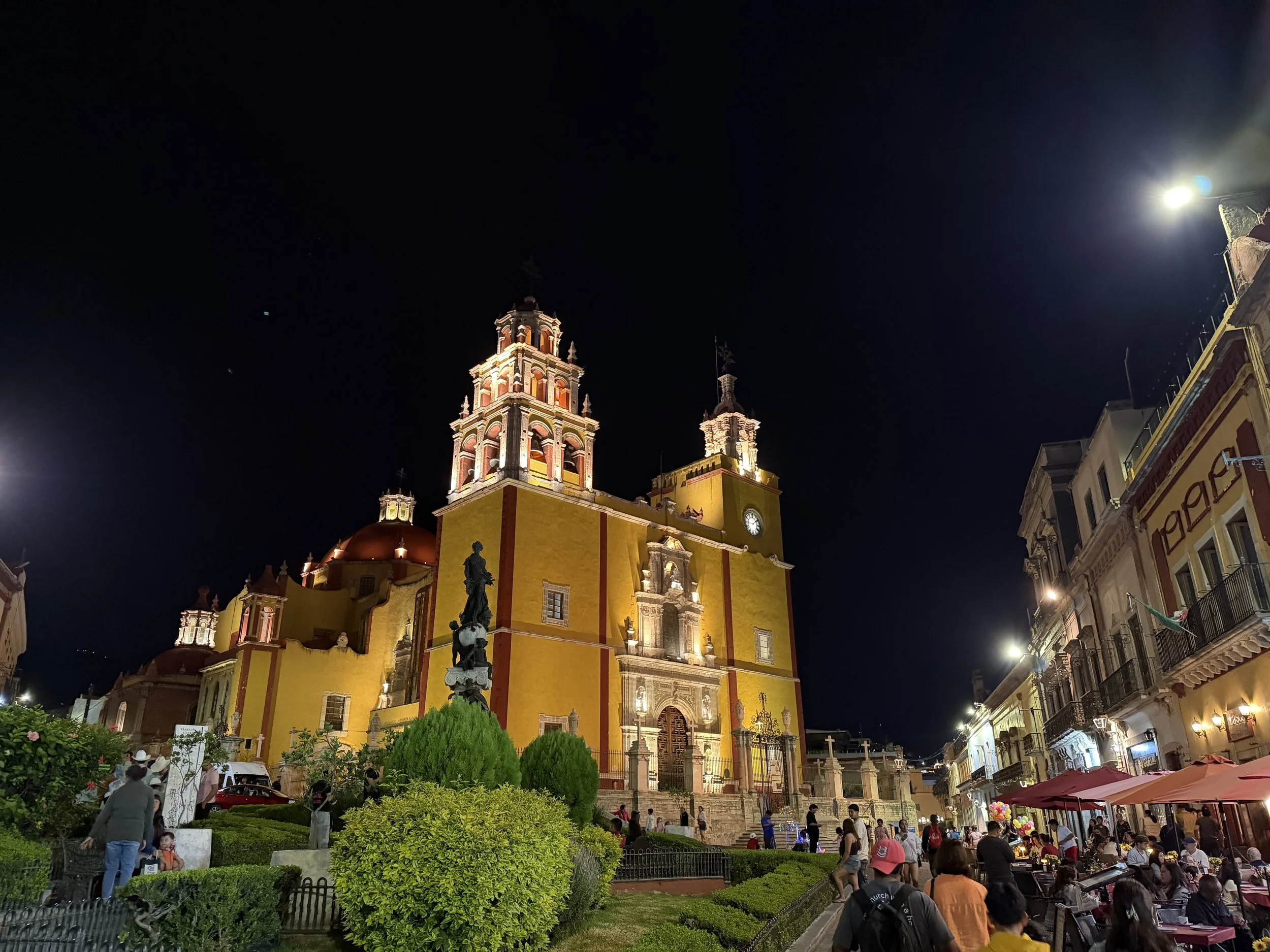
Basílica Colegiata de Nuestra Señora de Guanajuato
Guanajuato City, also known as Guanajuato Capital, was much livelier than I expected. The historic center was busy during the day with university students, local families, Mexican travelers, street musicians, food vendors, and people spending time in the plazas.
The historic city and its surrounding mines became a UNESCO World Heritage Site in 1988. Guanajuato earned the designation because of its mining history, churches, architecture, underground roads, and the way the city was built across the hills.
Because Guanajuato is also a university city, there is a younger energy mixed in with the history. You see students everywhere, which helps explain why the cafés, restaurants, plazas, and streets stay so active throughout the day and night.
It also has a strong domestic tourism scene. We met and saw many Mexican families and travelers visiting from other parts of the country, along with some visitors from Canada, the United States, and Europe. English was less common than in Mexico’s major beach destinations, so this is a good place to practice your Spanish and interact more with locals.
At night, the historic center became even busier, and not only on weekends. On almost any evening, we would come across a callejoneada, live music, a party, or a public event. Callejoneadas are a big part of Guanajuato’s culture, with musicians leading groups through the alleyways while sharing songs, jokes, and local stories.
You do not always need to research events ahead of time. We often found out what was happening by asking locals, seeing crowds gather, or hearing music from a nearby plaza.
The food scene is to die for here as well. Street vendors were set up throughout the historic center, restaurants became busier in the evenings, and coffee shops opened early with fresh bread and pastries.
The city layout also affects the atmosphere. Buildings stretch across the hills, staircases connect different streets, and roads disappear into tunnels below. It took us one day to figure out our way around, but after that, getting around became much easier.
The Most Walkable City
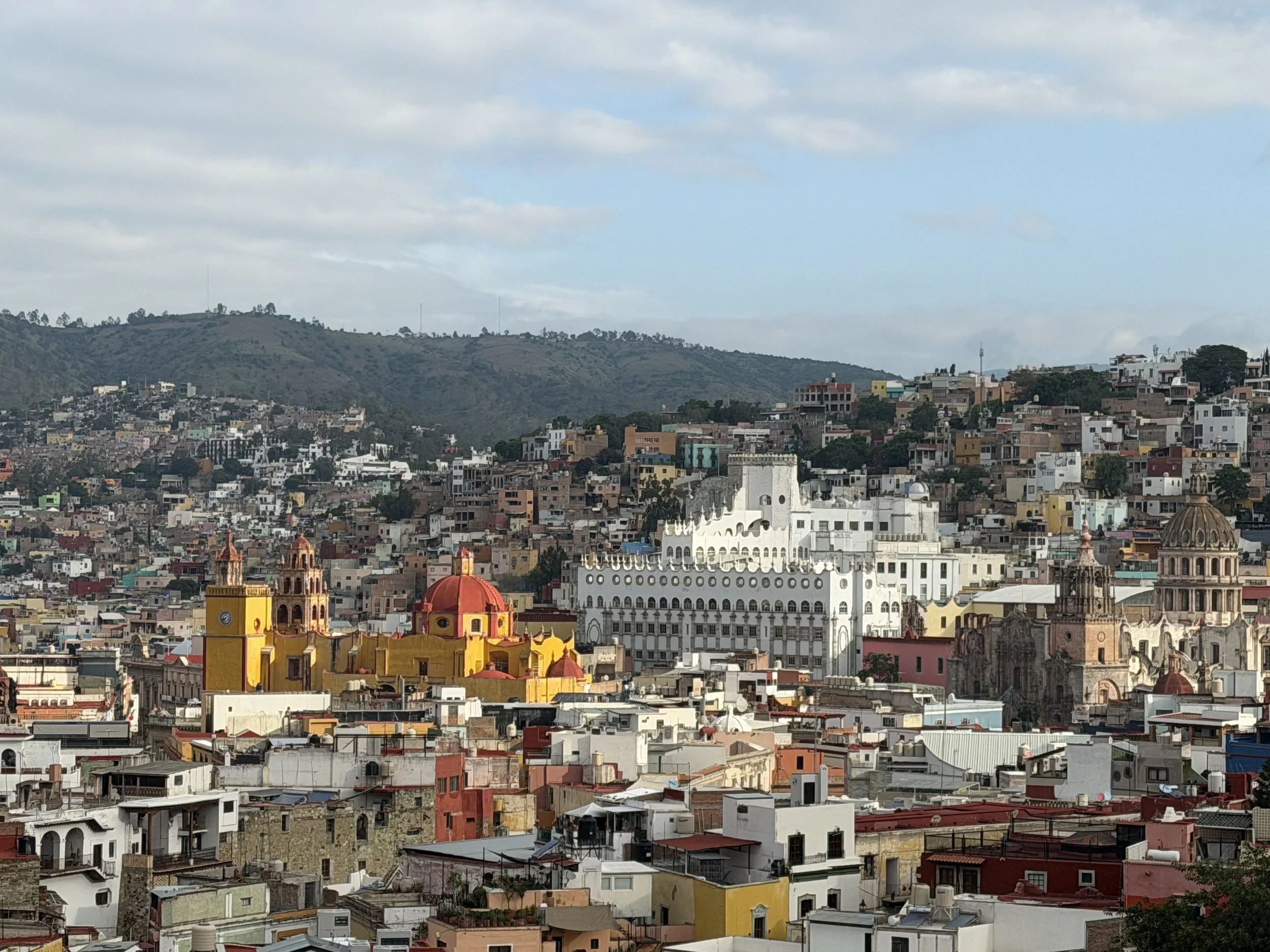
A view of the city from our Airbnb
We did not rent a car in Guanajuato City, and we never felt like we needed one. Everything is very close together if you stay near the historic center. Most of the main attractions, restaurants, coffee shops, churches, markets, and plazas are close enough to reach on foot.
In fact, the city is really designed for walking. Some streets are pedestrian-only, others are too narrow for cars, and many homes and businesses are reached by staircases or alleyways. An Uber may be able to get you close to your destination without being able to pull directly up to the entrance, which is especially important to know if you are arriving with luggage. I would ask your hotel or Airbnb host about car access before booking.
Walking was also how we found many of the places we ended up loving. We would be heading toward a landmark, then notice a café, small shop, church, or side street that made us change direction.
Just do not trust the walking time on Google Maps too literally. A route that appears to be five minutes away may include a steep hill, a long staircase, or both. Between the cobblestones, uneven sidewalks, and elevation, comfortable shoes are essential.
Guanajuato City sits around 2,000 metres, or roughly 6,600 feet, above sea level. I definitely did not feel sick from the altitude, but I was definitely catching my breath more than usual on the hills during the first couple of days. I have always lived at sea level, so I noticed the difference. It was nothing dramatic, but it is worth knowing before you start questioning why one staircase suddenly feels like a workout.
We used Uber when we had luggage, were visiting somewhere farther from downtown, or had simply reached our hill-climbing limit for the day. It was easy to find a ride, but for most of our time in the historic center, walking was still the simplest way to get around.
Guanajuato Attractions You Shouldn’t Miss
Many of the best things to do in Guanajuato City are packed into the Historic Center, which makes sightseeing surprisingly easy. You can group several nearby attractions together, walk between them, and still leave space for coffee stops, photos, and souvenir shopping along the way.
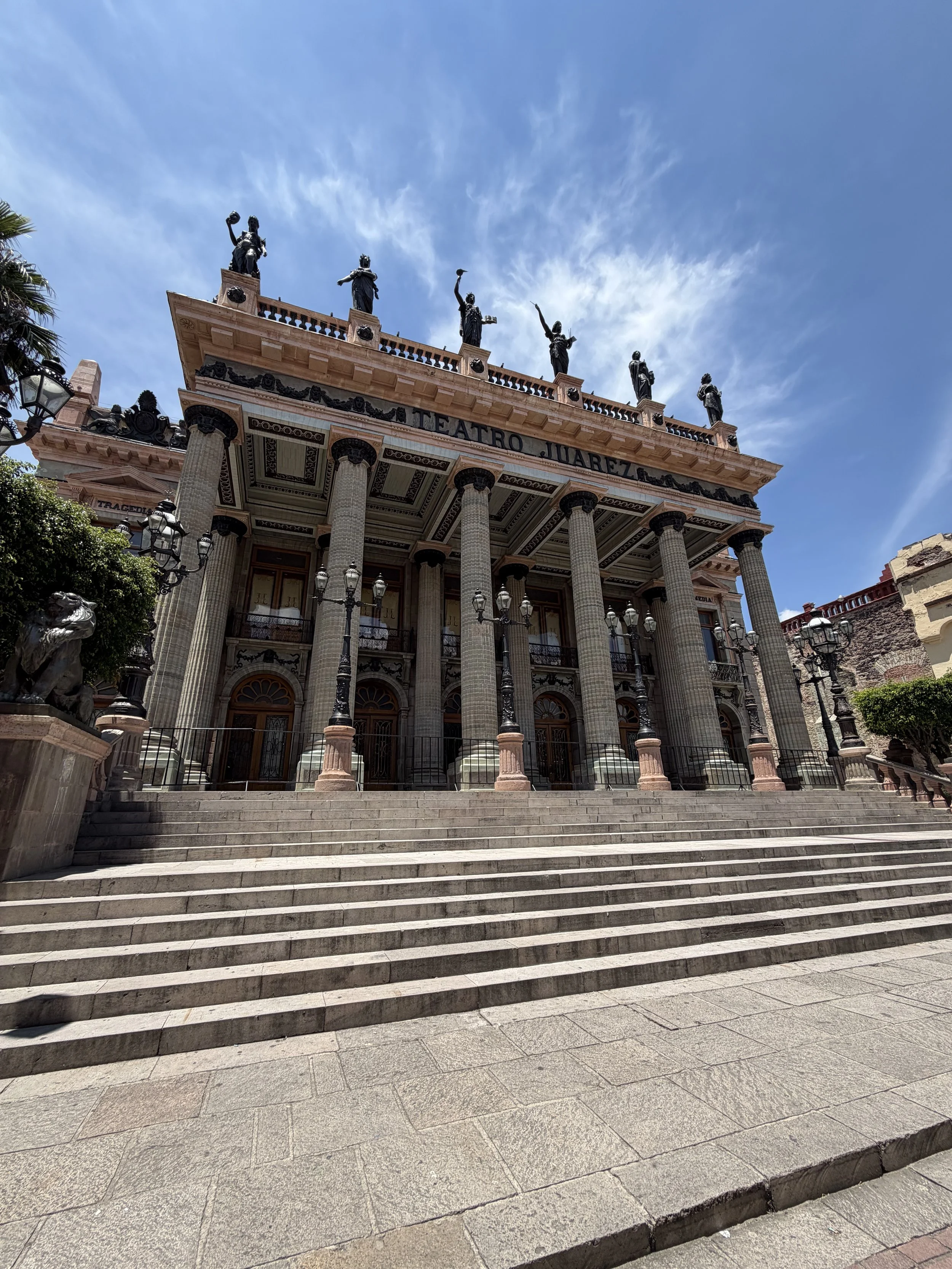
Teatro Juárez
Teatro Juárez and Jardín de la Unión sit right beside each other and are two of the easiest places to visit in Guanajuato City. Teatro Juárez is even more impressive in person, while the garden is a great place to sit, people-watch, and take in the energy of the city. I would visit during the day, then come back in the evening when the area gets much livelier. There are live events happening at the theater, although we didn’t get the chance to go to one.
The University of Guanajuato is also nearby and worth seeing for its huge staircase and stone exterior. It is a popular photo stop, but the steps are steeper than they appear. Go earlier in the day if you want to climb them before the hills have completely finished off your legs.
The Basílica Colegiata de Nuestra Señora de Guanajuato, the large yellow church beside Plaza de la Paz, is another easy stop in the historic center. Mass was often taking place when we passed, so you may need to return later if you want to see more of the inside.
Mercado Hidalgo is slightly farther from this cluster, but still easy to reach on foot from the historic center. Go earlier in the day when more vendors are open and the market is fully active. Bring cash and give yourself time to browse the food stalls, produce, local products, and souvenirs. It is also a convenient stop when you want to grab something quick to eat without sitting down for a full meal.
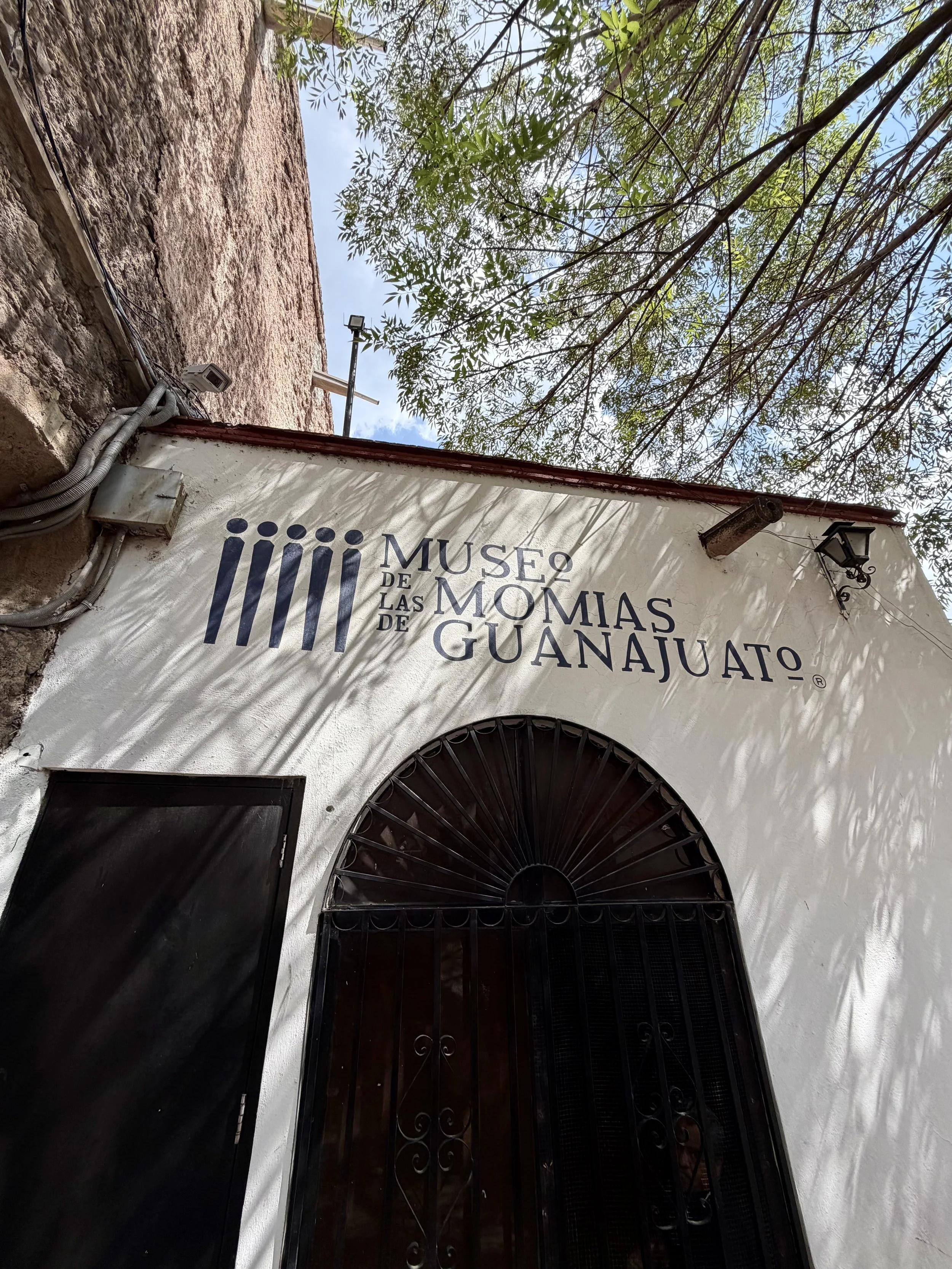
Museo de las Momias de Guanajuato
The Museo de las Momias de Guanajuato is slightly farther from the main attractions, but still walkable, but you may want to check the hours and plan transportation before going. We went on foot, but it was still a bit of a climb and slightly outside the downtown core.
Take time to read the information beside the exhibits as you look around. Seeing the mummified corpses felt a bit heavier than I expected, and knowing these were once real people made me experience it with a lot more respect.
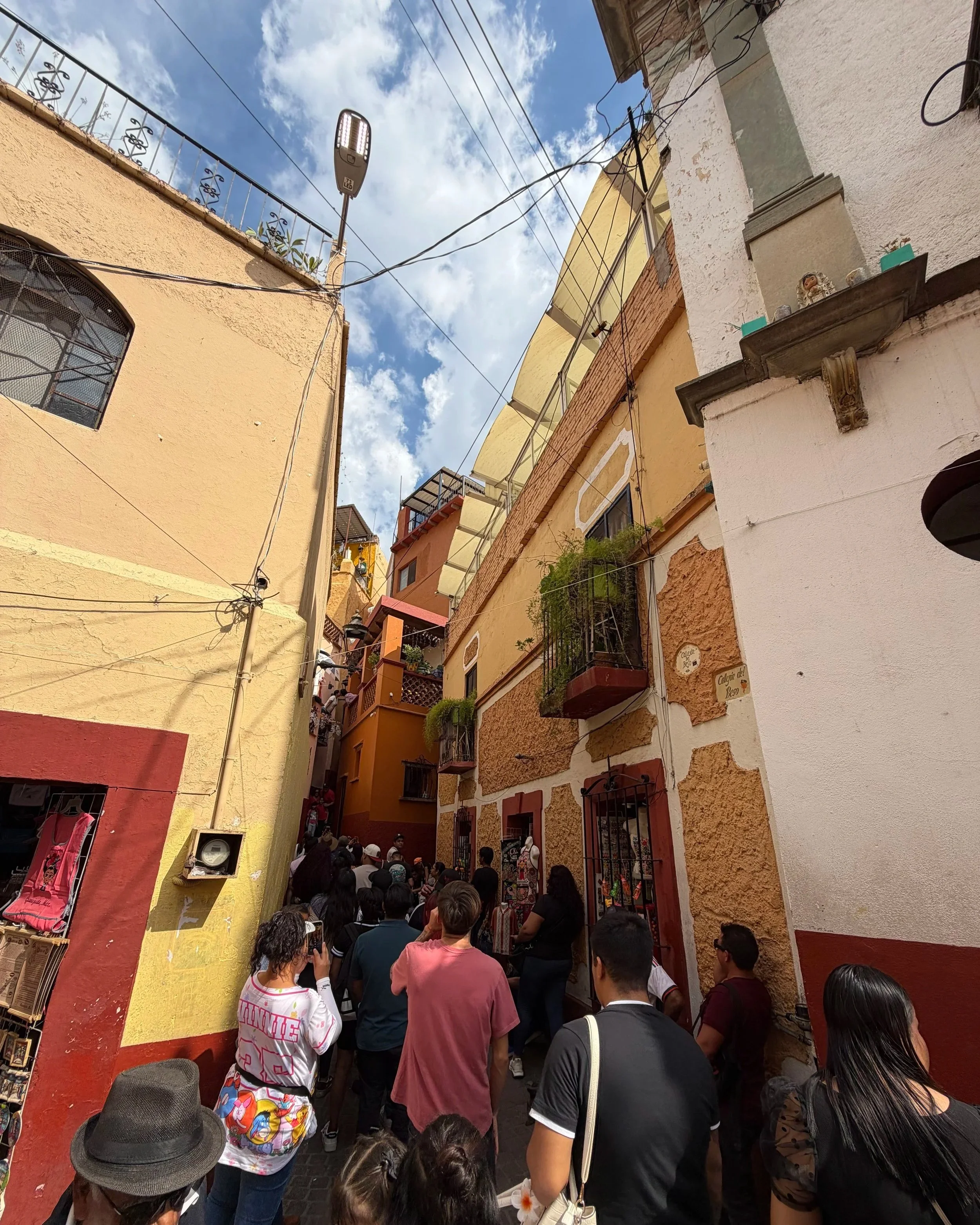
Callejón del Beso
Callejón del Beso is one of the most famous places to visit in Guanajuato City, but I would not plan a huge part of your day around it unless you want to go up onto one of the balconies. It was packed when we visited, and from the ground, it really is just a very narrow alleyway full of people waiting to take photos.
The story behind it is what makes it more interesting. According to the local legend, the alley was once home to Carmen, the daughter of a strict father, and Luis, a young miner he forbade her from seeing. The balconies were so close that they could meet between them, but the story ends tragically when Carmen’s father discovers their relationship.
Couples can go up onto the balconies for the traditional kissing photo, which would probably make the stop feel more worthwhile. Since Callejón del Beso is right in the historic center, it is still easy to see while you are already exploring nearby, but I wouldn’t necessarily build your whole Guanajuato City itinerary around it.
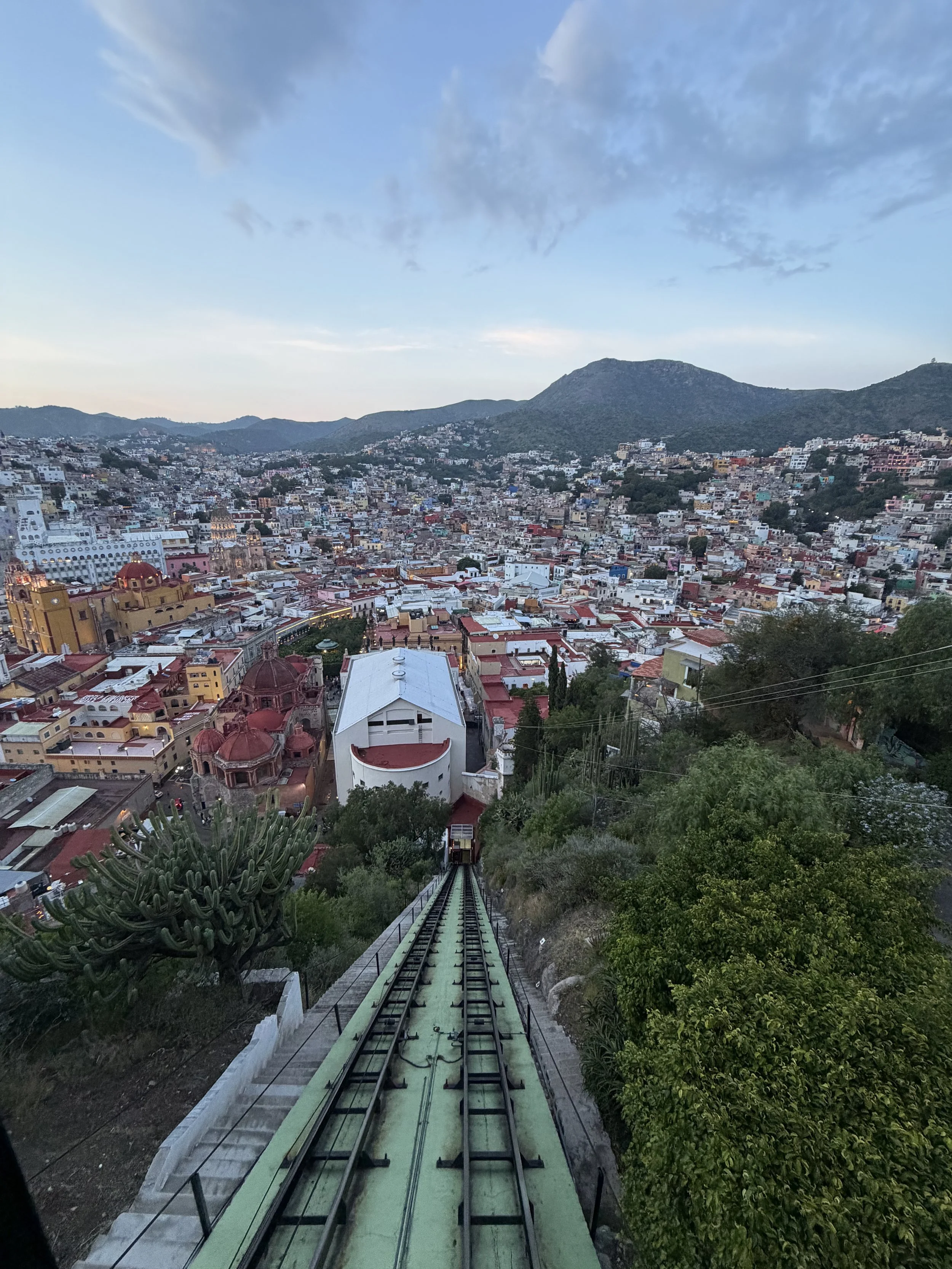
Funicular to Monumento al Pípila
Taking the Funicular up to Monumento al Pípila was easily my favorite experience in Guanajuato City, and I would call it a must-see. The view from the top is easily the best we found anywhere in the city. You can see the churches, historic buildings, and homes stretching all the way across the surrounding hills. From the top, Guanajuato somehow looks even more impressive than it does from the streets below.
The Funicular entrance is behind Teatro Juárez, and the ride takes around five minutes. At the time of writing, tickets cost 35 MXN for a one-way ride or 70 MXN round trip. You can ride both ways, or take it up and walk back down if you want to explore the streets along the hillside.
I am a little afraid of heights, so the steep ride gave me a small rush, but I felt completely safe the entire time. Give yourself more than a few minutes at the top because this is not a viewpoint you will want to rush. I recommend you grab some food from a local vendor while you’re up there. There are also places to take photos, look out over the city, and walk around the Monumento al Pípila before heading back down.
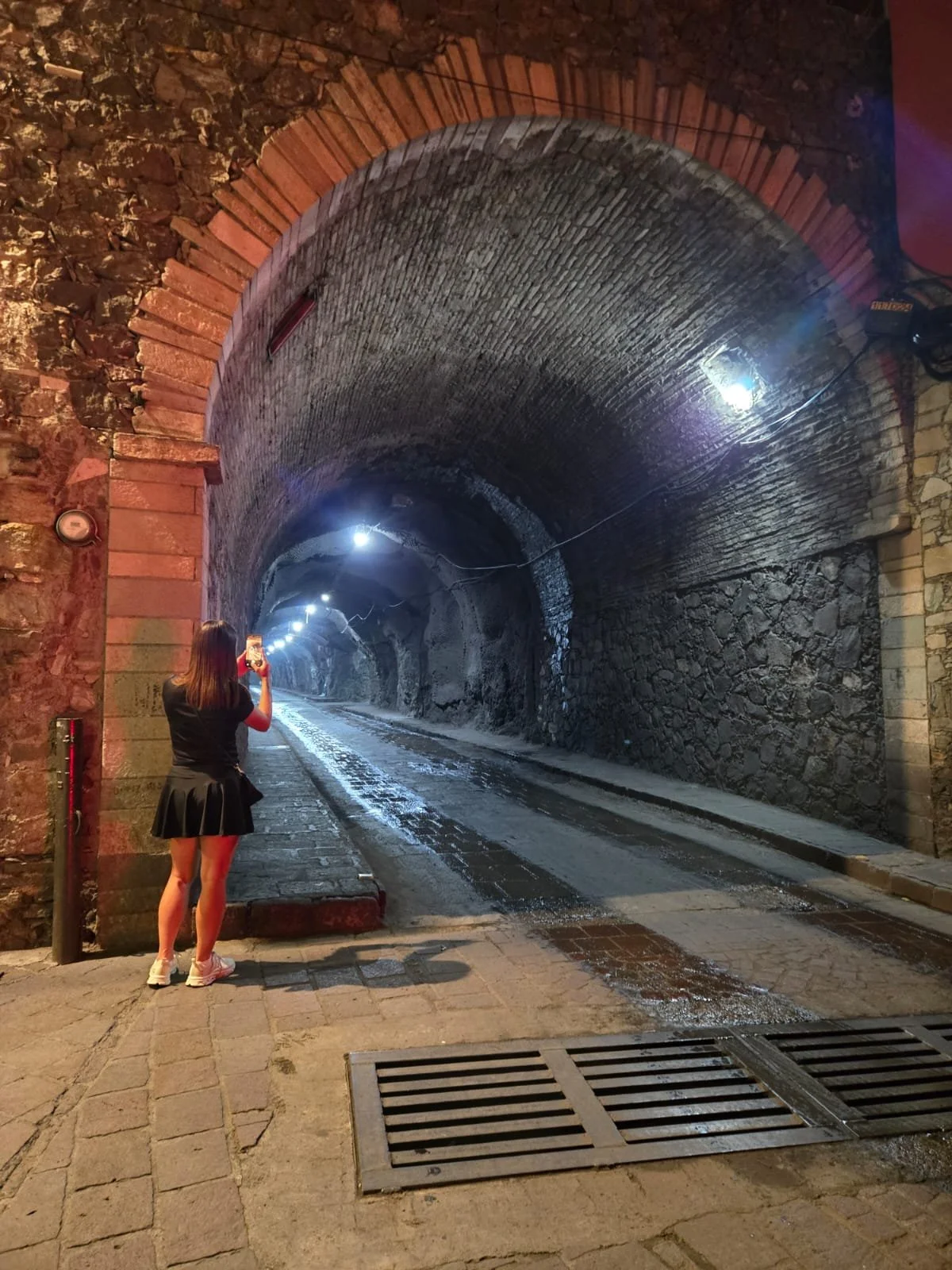
One of Guanajuato City’s many underground tunnels
On your way into town and probably throughout your trip, you’ll drive through Guanajuato’s underground tunnels. One of our Airbnb hosts explained that they were originally created to manage flooding, and the old riverbed was later turned into roads beneath the historic center.
They also explain why getting around can feel confusing at first. You might disappear underground, then come back up beside a completely different plaza or market. Sometimes walking is faster because cars have to follow the tunnel routes, one-way streets, and limited exits.
Many locals walk through the tunnels to get to their destinations quicker, but we were advised to be cautious in quieter sections. As two women traveling together, we preferred experiencing them from the car or simply checking them out from the entrance.
The Food Scene in Guanajuato City
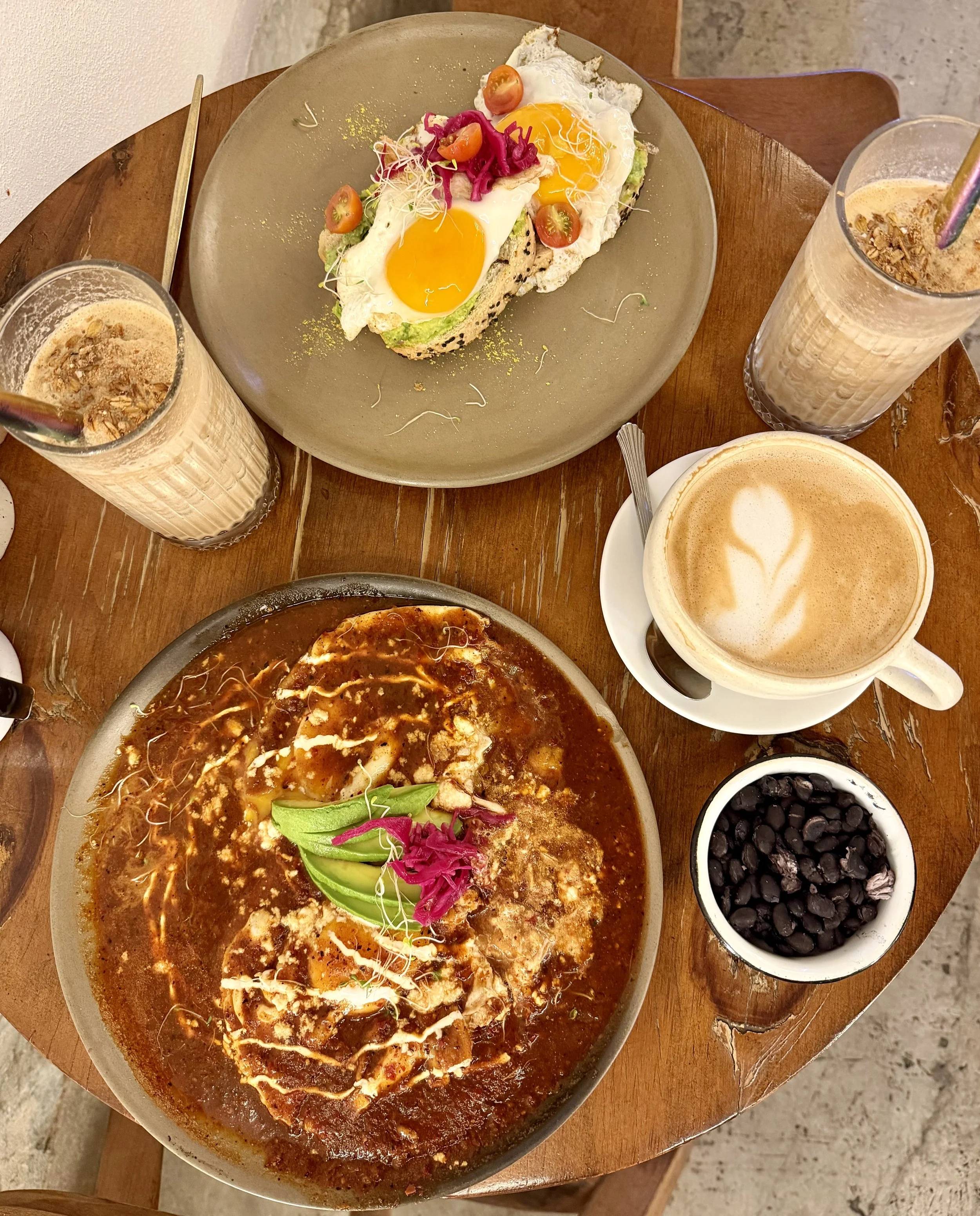
Breakfast from Luan Café
The food scene in Guanajuato City exceeded my expectations. It was sincerely one of the best surprises of the trip. The City Center had so many trendy restaurants mixed in with traditional Mexican spots, street-food stands, bakeries, brunch places, and smaller restaurants tucked along the side streets.
We honestly never ate anywhere we didn’t like, which is rare when traveling, especially when we opted for fairly healthy options. I always look for fresh ingredients, gluten-free items, better cooking oils, and lower-sugar treats, and Guanajuato gave us far more choices than I expected. We even found sugar-free ice cream and sourdough pastries, which blew my mind.
Most mornings started in a new café with a delicious artisanal coffee and breakfast before we headed out to explore. We didn’t plan every meal ahead of time either. We would usually Google whatever we felt like that day, which was often “healthy restaurant” or “healthy breakfast,” read the reviews, and try whichever place looked best. Somehow, it worked every time, and I would honestly recommend searching Google Maps to find what you’re craving.
I’m keeping this section a tad general for now, because I’ll be sharing a full article dedicated to the coffee shops and restaurants we tried in Guanajuato City, including what we ordered, the healthier options we found, and the places we would return to. I have way too much to say on this topic alone because the food was the highlight, so it deserves its own section.
I also ordered groceries from La Comer through Uber Eats and had them delivered directly to our Airbnb. This made it easy to keep healthy snacks, breakfast basics, and a few packs of protein on hand for making smoothies in the morning. There is also a Soriana within walking distance of the historic center, so you do not necessarily need a car or Uber to pick up groceries during your stay.
Is Guanajuato City Safe for Female Travelers?
I felt much safer in Guanajuato City than I expected to. In fact, we never once ended up in a situation that felt sketchy, met anyone who made us uncomfortable, or felt like we needed to leave an area quickly.
I arrived alone, spent time exploring by myself before my best friend joined me the following day, and also spent my last day in the city alone. She was with me for six days in between, so I experienced Guanajuato both as a solo female traveler and as part of a girls’ trip.
What stood out most was how respectful people were. We were never bothered or approached by anyone even once, which says a lot. Guanajuato was honestly one of the places where I have felt the most respected as a woman while traveling. Everybody was minding their own business.
During the day, I felt completely comfortable exploring alone, including its plazas, smaller streets, and alleyways. Once my friend arrived, we also spent time around the historic center after dark. There were usually locals, students, and many Mexican families visiting from other parts of the country, along with some travelers from Canada, the United States, and Europe.
Of course, we still used common sense. I would not recommend walking alone through dark, empty areas late at night, regardless of how safe a city feels. We watched our belongings, stayed aware of our surroundings, and used Uber when it was late or a route felt too quiet. We also chose not to explore the underground tunnels on foot after hearing that robberies can occasionally happen in the secluded sections.
This was our personal experience, and every traveler should still take normal precautions, but I would recommend Guanajuato City for both solo female travel and a girls’ trip. Not only would I personally feel comfortable returning alone, but I’m looking forward to it.
Practical Guanajuato Capital Travel Tips
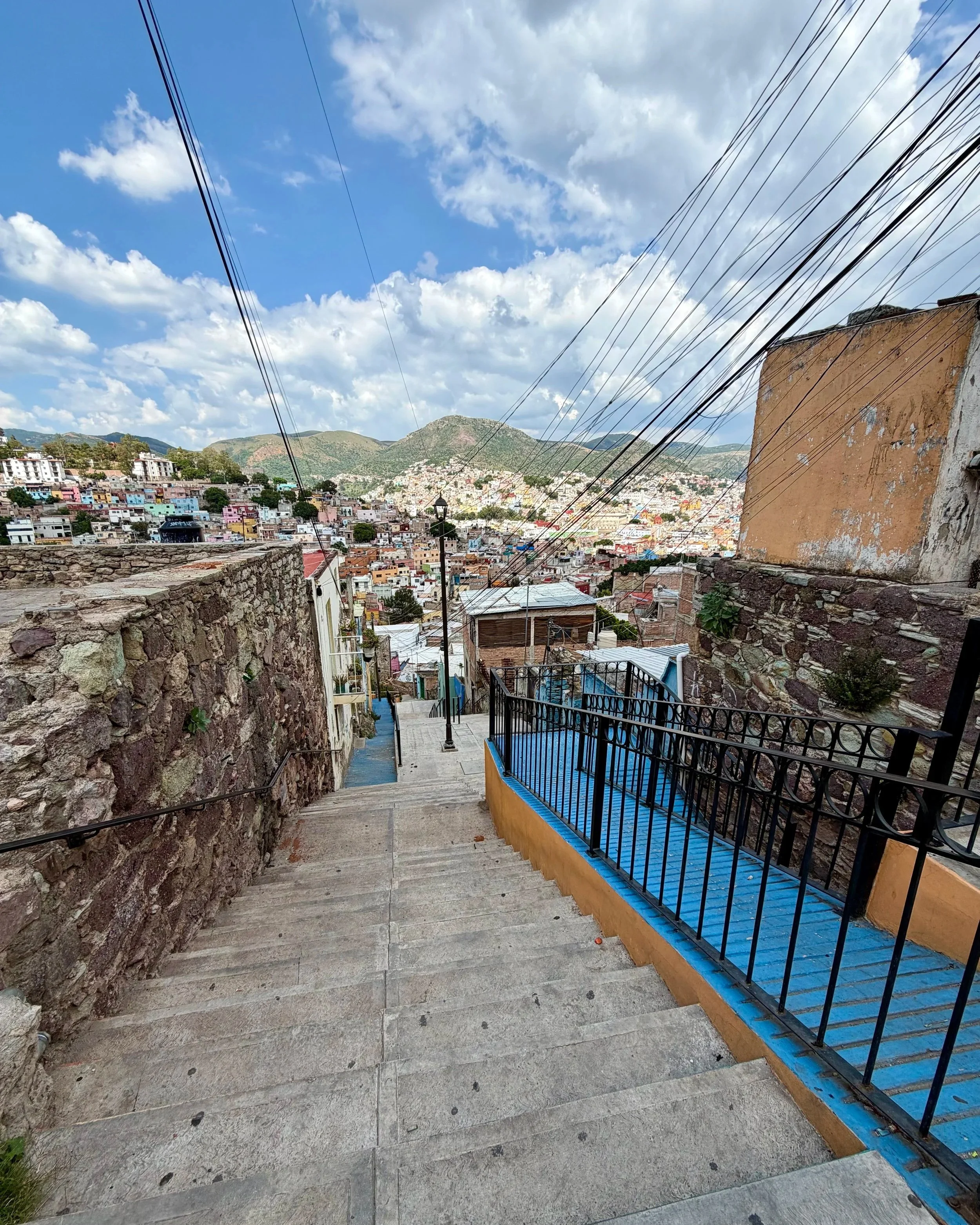
One of many stairways in Guanajuato
There are a few things to know before visiting Guanajuato City that will make the trip much easier.
First, bring comfortable shoes. I can’t stress this enough. The cobblestones, hills, stairs, and uneven sidewalks are no joke, and you will probably walk much more than expected. Google Maps is helpful, but it does not always make the elevation clear. A destination may look five minutes away and still involve a steep staircase or uphill climb.
The historic center can also be noisy at night. If you are a light sleeper, read accommodation reviews carefully and check whether the property is close to a plaza, bar, or busy pedestrian street. We had a horrible experience at one of the newer Airbnbs on the platform because it was directly underneath a gym. The sound of people deadlifting woke us up at 5 a.m., so look beyond the photos and read every recent review before booking.
It is also important to understand that the historic center is primarily meant to be explored on foot. Many streets are pedestrian-only, extremely narrow, or connected by staircases, so cars cannot reach every hotel, Airbnb, restaurant, or attraction. Even when an Uber can get close, you may still need to walk the final stretch with your luggage.
Before booking your accommodation, check the exact location on the map and ask the host whether a car can pull up directly outside. A place may look close to the historic center but still be at the top of a steep hill or long staircase. That might be fine during the day, but far less enjoyable when you arrive with a suitcase.
Uber was easy for us to use when we needed it, particularly for longer distances, steeper areas while carrying luggage, or attractions outside the historic center. Travelers with mobility concerns will likely need taxis or Uber more often and should stay close to the downtown core rather than choosing accomodation with a view of the city.
We also got very lucky and found Airbnb hosts that offered transportation services to and from the airport. Claudia’s home was one of them - a true gem, ideal for a couple or solo travelers. Another was Casa Paulina Mexiamora, a lovely home with two bedrooms and a nice balcony view just minutes from many trendy cafes and restaurants.
I would also check museum hours, church schedules, and admission prices before heading out. Some attractions close earlier than expected, and churches may limit entry during Mass.
How Many Days Do You Need in Guanajuato City?
You can see many of the main Guanajuato City attractions in two days, but you will feel quite rushed.
Three or four days would give you enough time to visit the landmarks, try different restaurants, explore the mercados, try different cafés, visit the museums, and still leave room to wander without worrying about the time.
We stayed in Guanajuato City for a total of 5 days, since we actually headed out to San Miguel de Allende for a couple of nights. I never felt like we had run out of things to do, especially because so much of the trip involved walking, finding new places to eat, and seeing what was happening around town that day.
For a first trip, I would recommend at least three full days in Guanajuato City. Add more time if you enjoy slower mornings, food-focused travel, museums, or day trips. There are many nearby cities and peublos mágicos that you can explore if you give yourself more time.
Who Should Visit Guanajuato City?
Guanajuato City is a great fit for travelers who want to spend most of the day out exploring rather than staying tucked away at a resort.
It is especially well suited to:
People who enjoy walking and finding places as they go
Food and coffee lovers
Travelers looking for a more local experience in Mexico
Anyone who wants more opportunities to practice Spanish or take a class
Solo travelers who prefer busy, social areas
Women planning a girls’ trip (we felt super safe)
Wellness-minded travelers who still want plenty of restaurant and hiking options
Anyone combining Guanajuato Capital with San Miguel de Allende or Querétaro
Guanajuato City is also a good fit for both sober travelers and those who do drink. We are alcohol-free, and we still found plenty to enjoy through the food scene, cafés, markets, museums, and walkable attractions. At the same time, travelers looking for local beer, cocktails, or wine will find plenty of bars and restaurants around the historic center, and everywhere you go.
We noticed that the city has a strong domestic tourism scene, and we saw many Mexican families and travelers visiting from other parts of the country. We also heard far less English than we would in a major beach destination. You can still visit without speaking fluent Spanish, but knowing a few basics will make ordering food, asking questions, and getting around much easier. We did encounter a few people who spoke English, but we both are fluent in Spanish as well.
Guanajuato is probably not the best fit for someone looking for a quiet, resort-style trip. The historic center is lively, noisy in some areas, and best experienced on foot.
The hills may be difficult for anyone with limited mobility or who strongly dislikes walking uphill. That said, we saw plenty of elderly locals climbing the streets and staircases without any trouble. They were clearly much more used to the terrain than we were, but it was still impressive.
Is Guanajuato City LGBTQ+ Friendly?
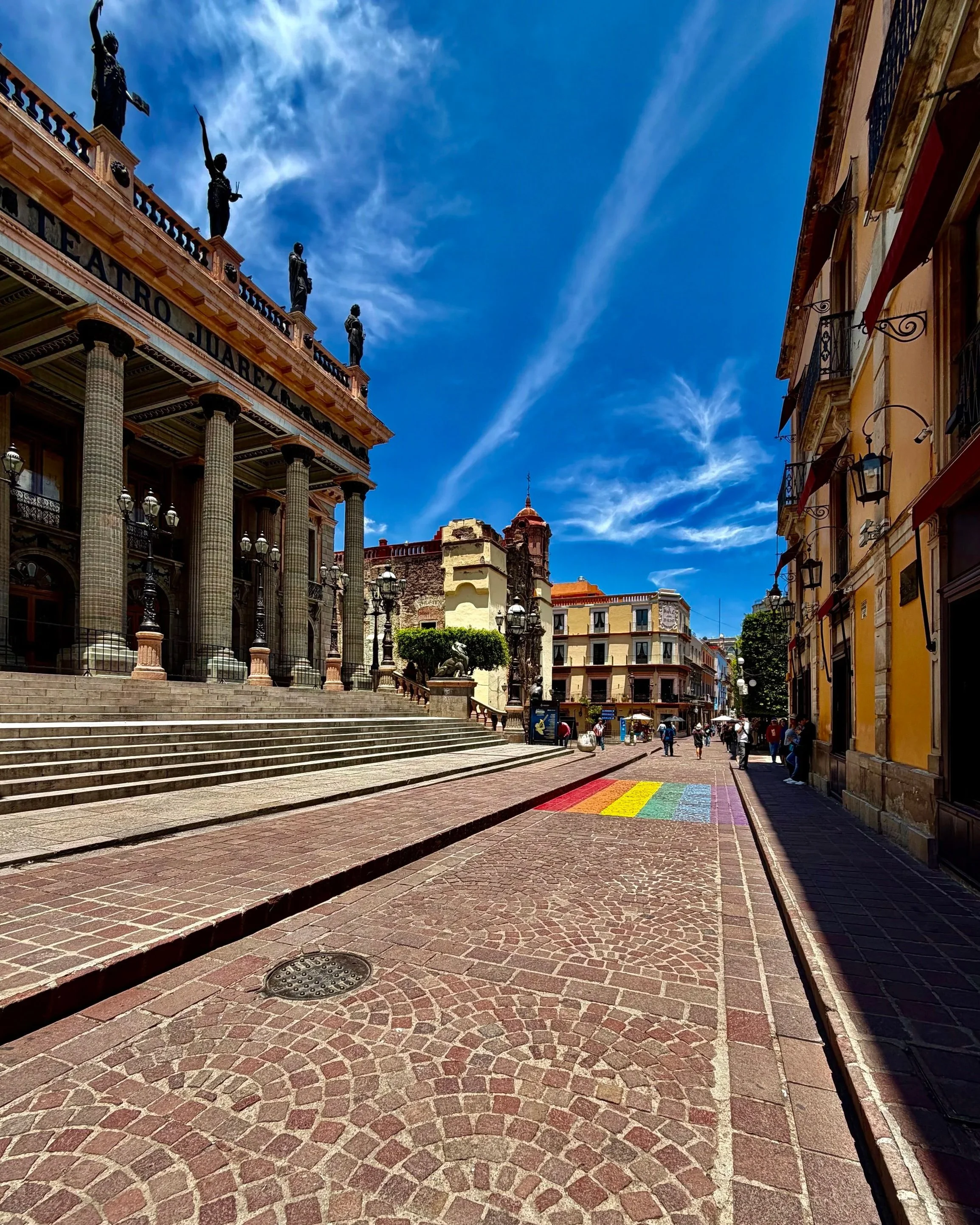
LGBTQ+ friendly community
Guanajuato City felt visibly welcoming to LGBTQ+ travelers. Around the historic center, we noticed Pride murals, rainbow flags, inclusive signs, and several restaurants, cafés, and other businesses openly showing that they were LGBTQ+ friendly.
There is also an established LGBTQ+ community in Guanajuato Capital, with local Pride events and businesses catering to queer residents and visitors.
Of course, seeing Pride flags does not guarantee that every LGBTQ+ traveler will have the exact same experience, and I was not visiting with a romantic partner, so I cannot personally speak to public displays of affection as a couple. Still, the visible support throughout the city was reassuring, and nothing about Guanajuato made it feel like LGBTQ+ travelers needed to avoid visiting.
For extra peace of mind, look for businesses displaying Pride flags, check recent reviews, and message your accommodation beforehand if you have specific concerns. Based on what we saw, Guanajuato City can be a comfortable destination for LGBTQ+ travelers while still offering a much more local experience than Mexico’s larger queer tourism destinations.
Is Guanajuato City Worth Visiting for Female or Solo Travelers?
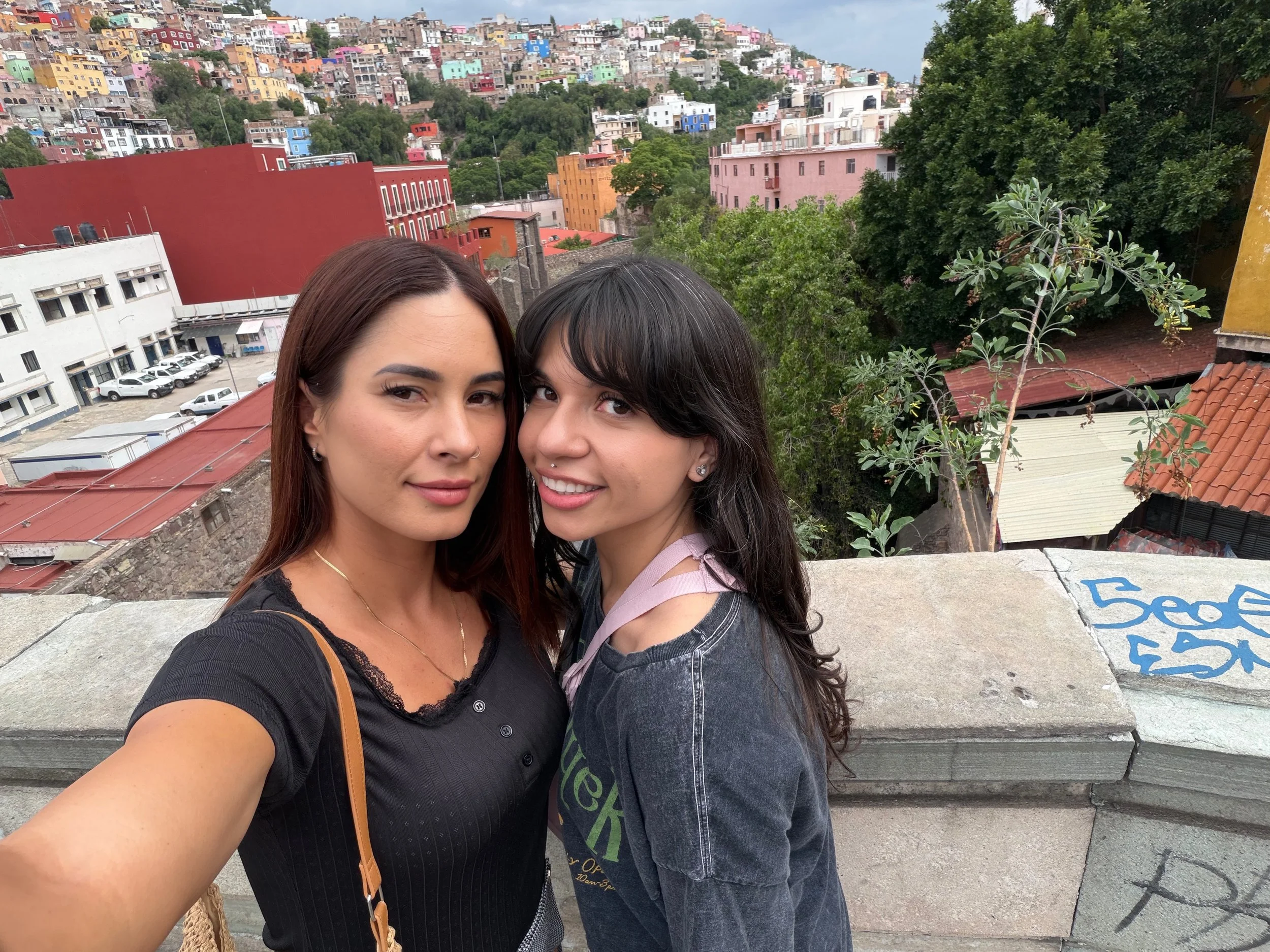
Selfie of me and my best friend, Paula, after visiting the mummy museum
Yes, Guanajuato City is absolutely worth visiting.
The architecture and churches were what originally made me want to go, but the trip ended up meaning so much more than checking landmarks off a list. We got our steps in and then some, tried different restaurants and cafés every day, listened to live music in Centro, and changed our plans whenever something else sounded better.
Honestly, this trip was life-changing for me. It reminded me how good it feels to stop trying to control every detail, to simply go with the flow, and live in the present. That became the whole mood of Guanajuato for me, and it is something I want to bring into the rest of my life too.
I highly recommend researching the Guanajuato City attractions you really want to see, but not planning the trip down to the hour. Choose a few priorities, then head out on your own or with your group and explore. Talk to locals about what is happening that day, follow the music into a plaza, or change your plans when you find something that interests you more. Venture off to explore other cities if you feel called to.
Guanajuato also worked so well for the way I like to travel. I could experience the food scene, enjoy artisanal coffee, find healthier meals, and still try something new every day.
I would return without hesitation. There are more restaurants I want to try, some I want to return to, and probably dozens of streets we somehow missed while getting distracted by food, music, and whatever else caught our attention.
I’ll be sharing much more from this trip, especially where we ate, the healthier options we found, and all the Guanajuato City coffee shops we tried along the way.